
How to Share Your Story on My Davidson
Your time at Davidson—on campus, across the country, or around the world—is full of moments that future Wildcats are dying to hear about. My Davidson is a platform for you to share those authentic experiences with prospective students, alumni and current peers.
Prospective students are curious, a little nervous, and trying to picture themselves in your shoes. The best blog posts don’t just report what you did—they show what it was like and why it matters to the reader.
Use this guide to brainstorm, structure and submit your story!
Submit Your Story
Submit your story using our form, and be sure to attach all relevant files, including photography.
5 Quick Changes to Elevate Your Story
If you are turning a class paper, project reflection, or study abroad summary into a blog post, keep in mind that a professor and a high school student want different things. Transform your reflection into a compelling story with these five edits:
-
Open with a scene, not a summary: Start in the lab at 2:00 a.m., on a bus in Cape Town, or at the exact moment your data finally made sense. Save background context for the second paragraph.
-
Cut academic jargon and methods: Condense methodology to a single sentence. Focus instead on the surprise, the setback, and the “aha!” moment. Write casually in the first person (“I,” “we”).
-
Write directly to someone: Use “you” and picture a curious high school junior reading along.
-
Answer “So What?” for the reader: Explain how they could get a similar opportunity, what practical details they need to know, and why it matters.
-
Let your personality show: Incorporate humor, doubts, sensory details (colors, smells, sounds), and small specifics—like the snack that fueled your fieldwork or your professor’s favorite catchphrase.
Choose a Format
The exact same experience can become very different posts depending on the structure you choose.
Find inspiration below—or be the first to try an unused format!
Deep Dives & Reflections
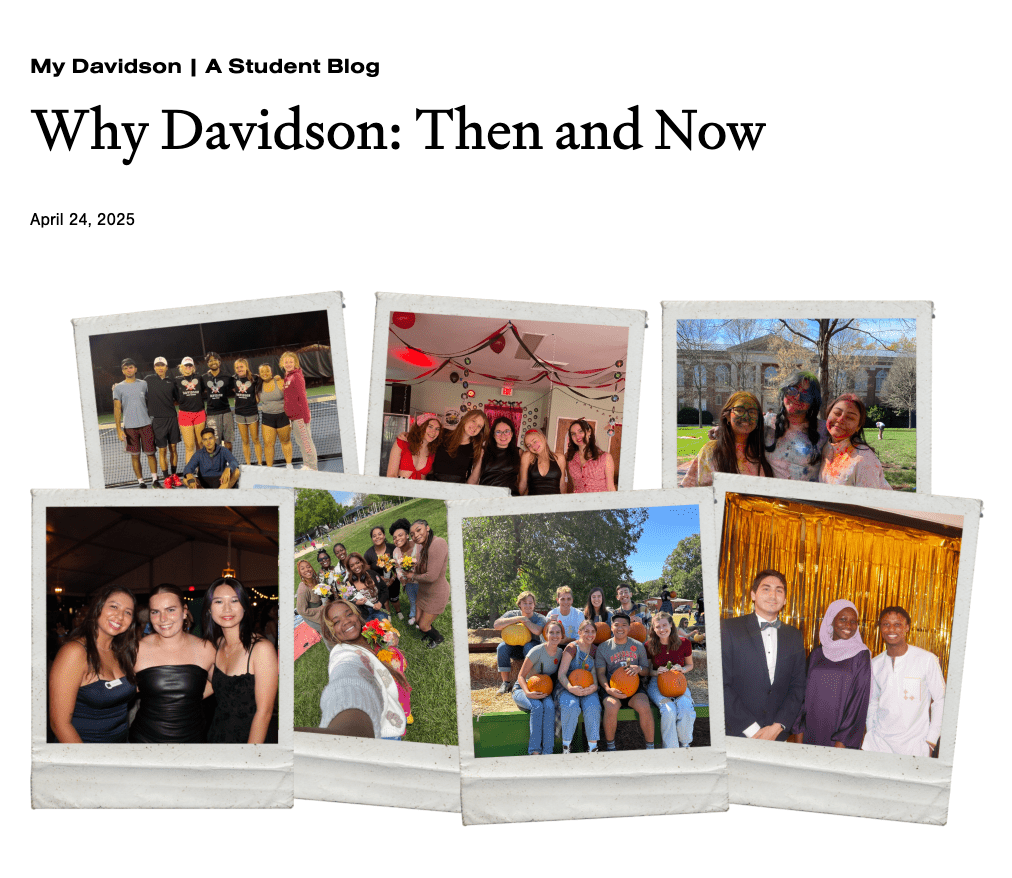
Then & Now / Reflections
Compare what you believed on day one vs. what you know now
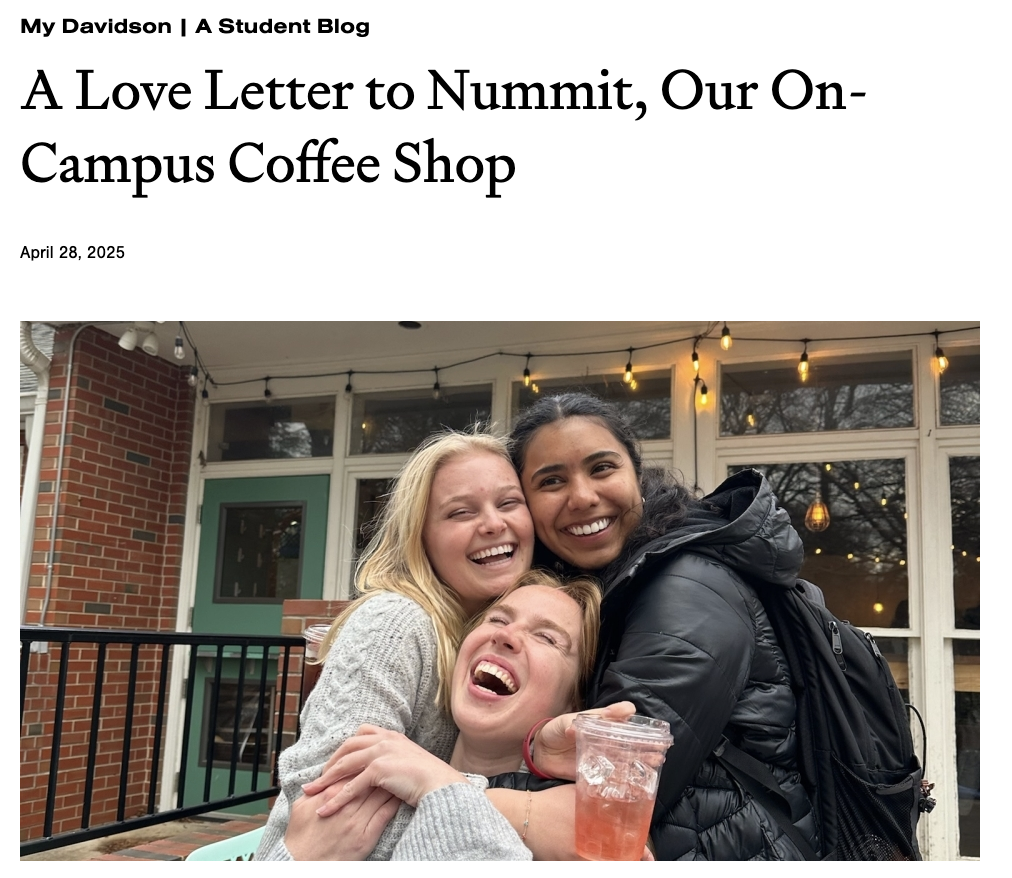
A Letter
Write to your past self, a mentor or a future student in your position. Or write an ode to a favorite spot or memory!

Journal Entry or Texts Home
Share dated snippets or text chains capturing real-time thoughts.
Visual & Media Storytelling
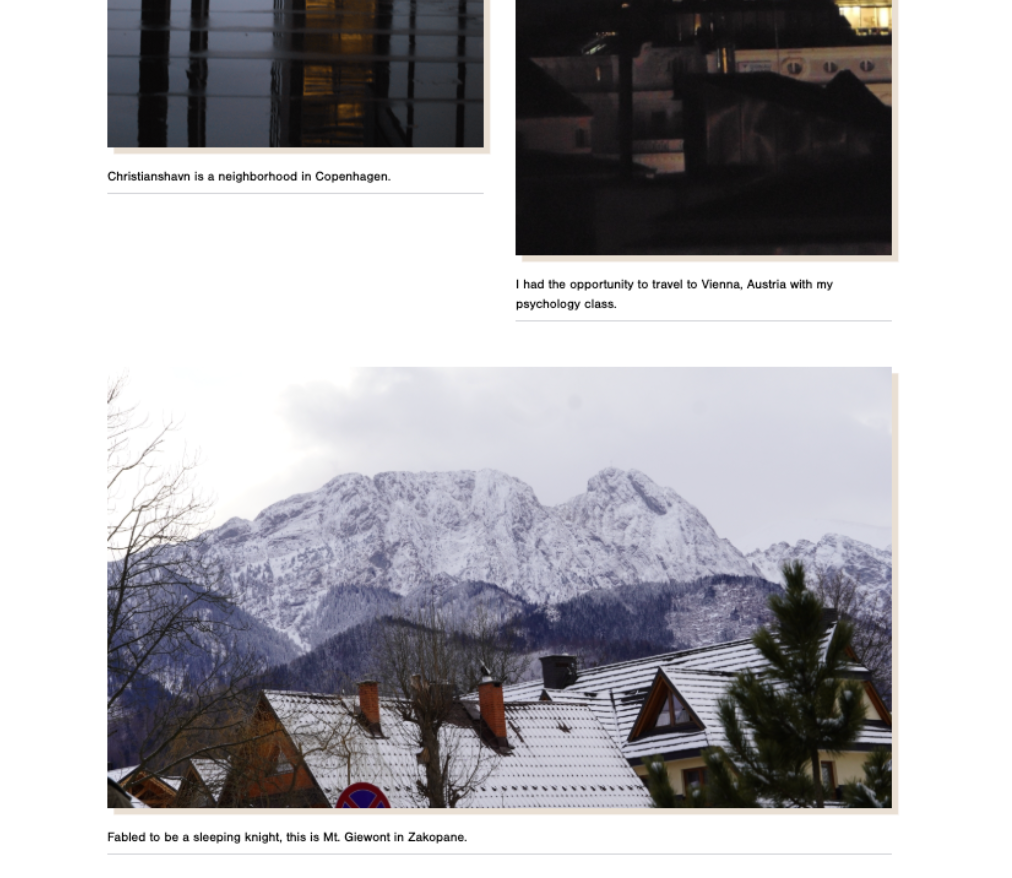
Photo Essay
Share a curated gallery of 10–15 photos telling a narrative arc with captions.
5 Objects
Share a list of objects that tell the story of your experience.
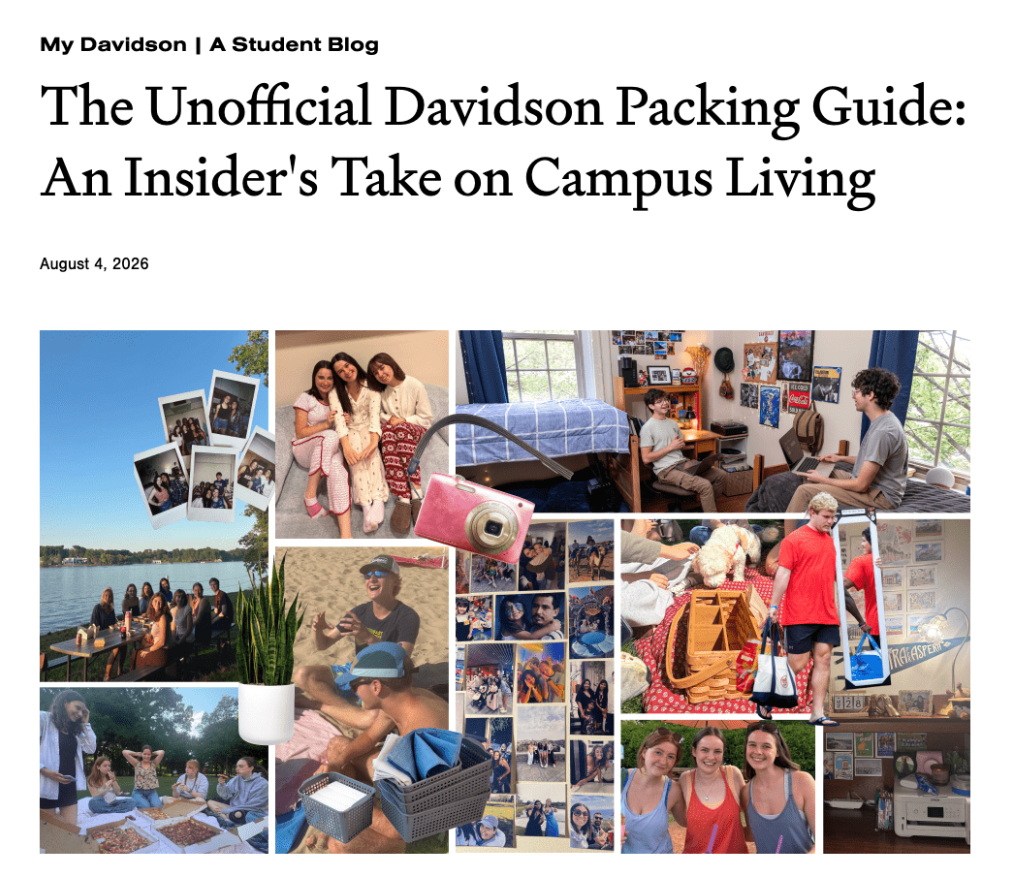
A Packing List
Share your packing list for an on-campus event or experiential learning opportunity.
Action-Oriented & Day-in-the-Life
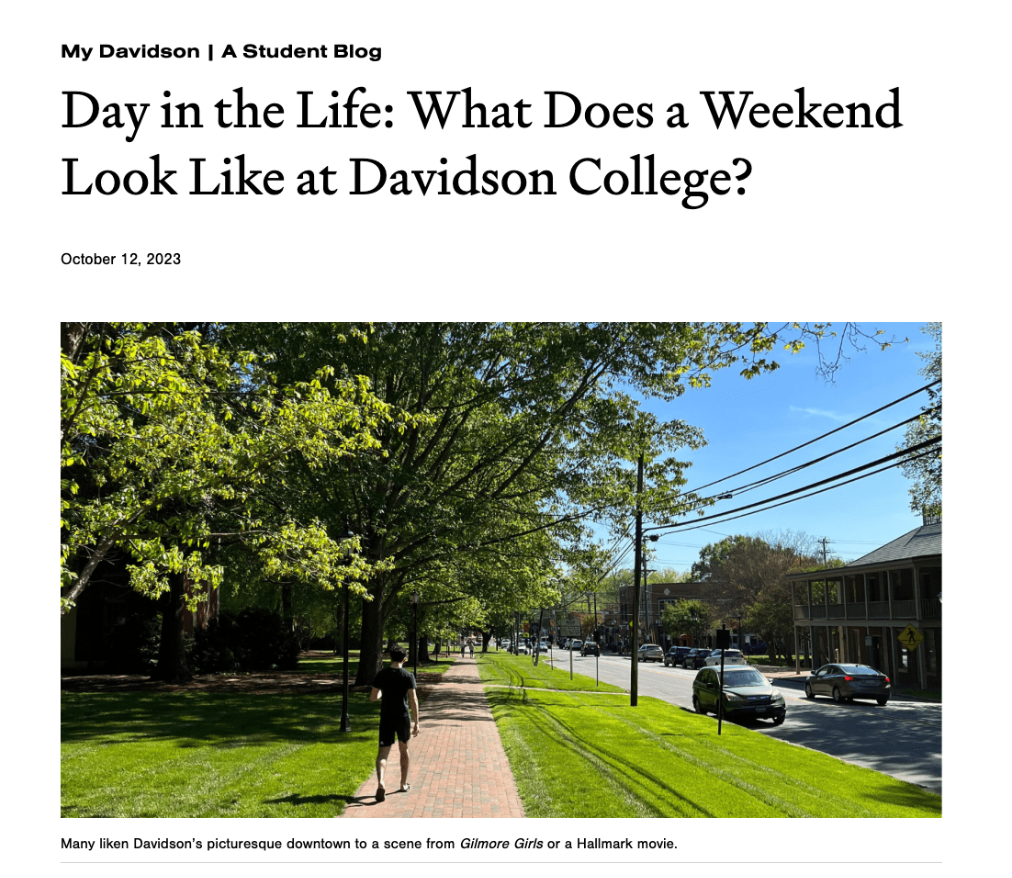
Day in the Life
Share an hour-by-hour breakdown of a typical day in your life.
Timeline or Countdown
Share chronological highlights or a day-by-day look leading up to a big event.
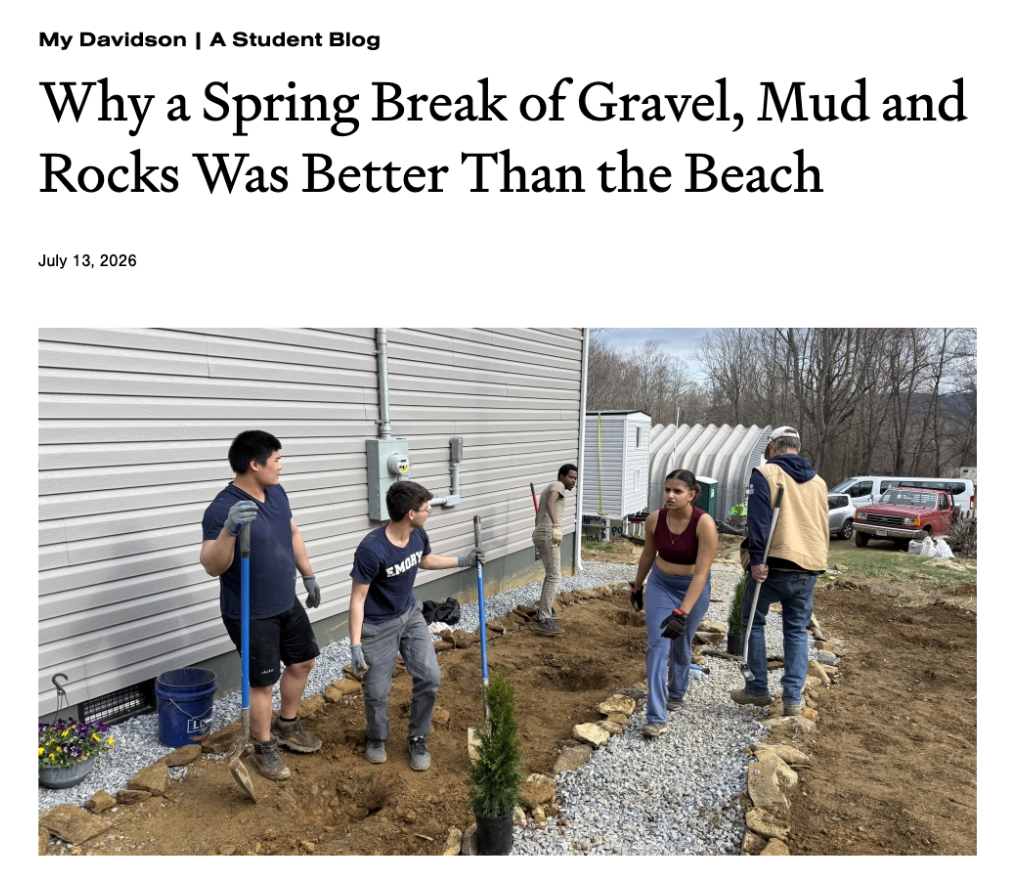
A Hot Take
Explain why an unconventional choice beat a traditional one.
Lists & Roundups
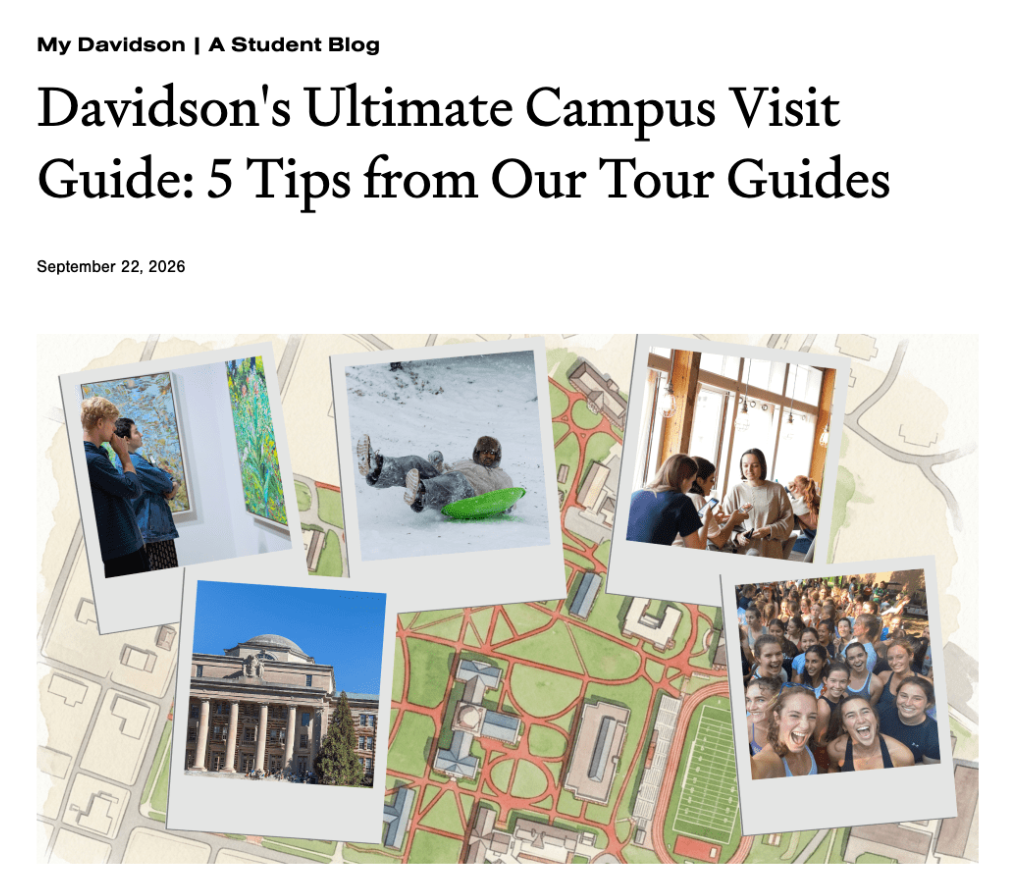
A Listicle
Share bulleted or numbered key takeaways.
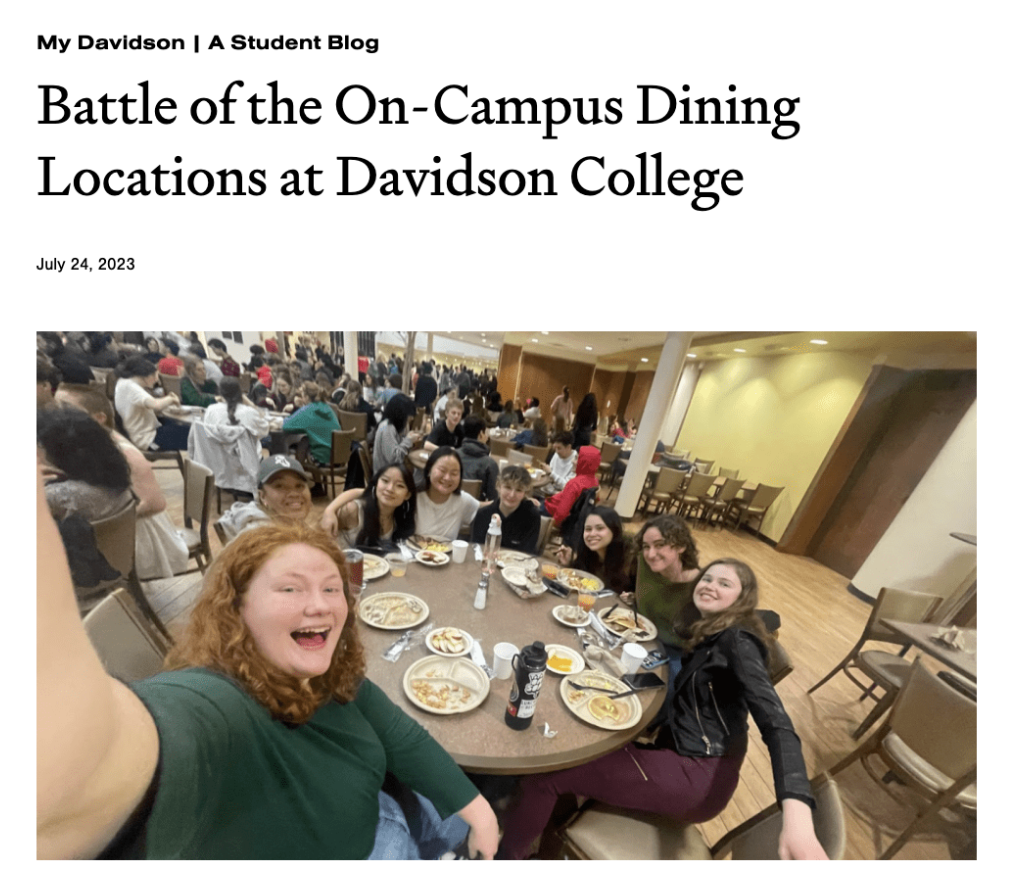
Rankings
Rate campus study spots, traditions, dining locations or study abroad spots.
A-to-Z Glossary
Share the dictionary to your experience: inside jokes, program jargon, and new terms learned.
Interviews & Perspective Shifts
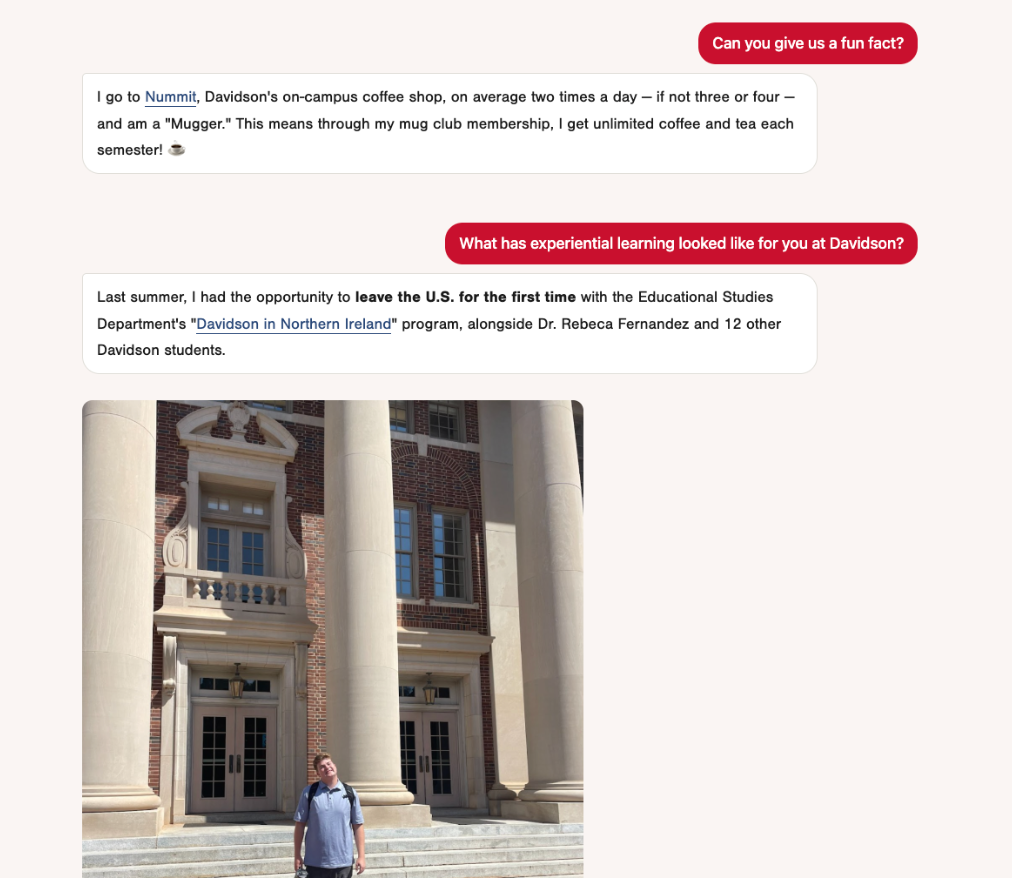
Q&A
Share a conversation with a professor, teammate, supervisor, or self-interview.
Explain It 3 Ways
Explain a complex project to a 10-year-old, a grandparent and a future student.
Myth vs. Reality
Debunk a common misconception about a major, a research project, or a program.
Prompts to Get You Started
You don’t need to answer all of these. Choose 2 or 3 prompts that spark a real memory and build your post around them:
- The Story: What moment would you tell a friend about first? What did you almost not do, and why did you do it anyway? What did you get completely wrong at the beginning?
- The Growth: What can you do now that you couldn’t do before? What did you use from a class that seemed totally unrelated?
- Distinguishing Davidson: How did you find this opportunity, apply, and get funding? What part of this could only have happened at Davidson?
- The Reader Connection: What would you tell a high school student who doesn’t think they’re “a research person,” “a travel person,” or “a leader”?
- Just for Fun: If your experience were a movie, what would it be called? What song would be on its soundtrack?
Give Your Story a Clickable Title
A strong title promises a story, a surprise, or practical insight.
- Instead of: Summer Research on Stream Ecology in Kenya
Try: I Spent Five Weeks Counting Bugs in Kenyan Streams, and It Changed How I See Science - Instead of: Internship Reflection: Nonprofit Communications
Try: 5 Storytelling Lessons from a Nonprofit That Can’t Afford to Waste Words - Instead of: Final Project: Water Quality Analysis
Try: What’s Really in the Lake? A Myth-Busting Guide from Someone Who Tested It - Instead of: Study Abroad Reflection: Copenhagen
Try: Dear First-Year Me: Here’s What Copenhagen Taught Me About Being Lost
For more inspiration, look at how these posts name their experiences: From Döner to Drama, From “No Clue What That Is” to Nationals and What Would Dolly Do.
Submission Requirements & Media Guidelines
Written Submissions
-
Length: 250–500 words recommended (maximum 1,000 words).
-
Format: Attach your post as a Google Doc or Microsoft Word document (
.docor.docx).
Photo Essays & Vlogs
-
Photo Essays: 10–15 high-quality images with captions, accompanied by a brief introductory and concluding paragraph.
-
Vlogs: Video files under 5 minutes in length, accompanied by a brief written introduction.
Photos & Video Guidelines
-
Headshot Required: Minimally, include a clear headshot of yourself with your submission.
-
Image Quality: Provide large, high-resolution original photo files to prevent pixelation on the website.
-
File Naming: Please include your full name in all uploaded photo and video file names (e.g.,
Jane_Doe_Headshot.jpg,Jane_Doe_Photo1.jpg). -
Attachment: Attach photos and videos as separate, individual files to the submission form rather than embedding low-resolution images in the text document.
-
Rights & Permissions: Ensure you have explicit consent from anyone appearing in your photos or videos. Only submit original media that you personally took and own the rights to.
Editorial Process
All submissions are reviewed by College Communications editorial staff for grammar, spelling, clarity, length, and for issues pertaining to libel. All posts adhere to the College’s Style Guide.
Editors reserve the right to determine if and when material is published. If revisions or questions arise, we will reach out to you directly.